处理重塑的提供者树
https://blueprints.launchpad.net/nova/+spec/reshape-provider-tree
虚拟驱动程序需要能够改变它们暴露的提供者树的结构。在迁移现有资源时,现有的分配需要与库存一起移动。并且必须以避免竞争条件的方式进行,在这种情况下,第二个实体可能会对正在移动的库存创建或删除分配。
问题描述
用例
libvirt 驱动程序当前在计算节点提供者上清点 VGPU 资源。为了利用提供者树,libvirt 需要为每个物理 GPU 创建一个子提供者,并将 VGPU 库存从计算节点提供者移动到这些 GPU 子提供者。在已经将 VGPU 资源分配给实例的实时部署中,分配需要与库存一起移动。
希望建模 NUMA 的驱动程序同样需要创建子提供者,并将多个类别的库存和分配(处理器、内存、与 NUMA 对齐的 NIC 上的 VFs 等)移动到这些提供者。
驱动程序正在使用自定义资源类。该资源类被添加到标准集合中(使用一个新的、非
CUSTOM_名称)。为了使用标准名称,驱动程序必须将库存和分配从旧名称移动到新名称。
这些只是现在或将来可能存在的示例情况。我们在这里描述的是一个通用的枢轴系统。
提议的变更
总体流程如下。红色部分仅在需要重塑时发生。这仅代表计算启动时的理想路径。
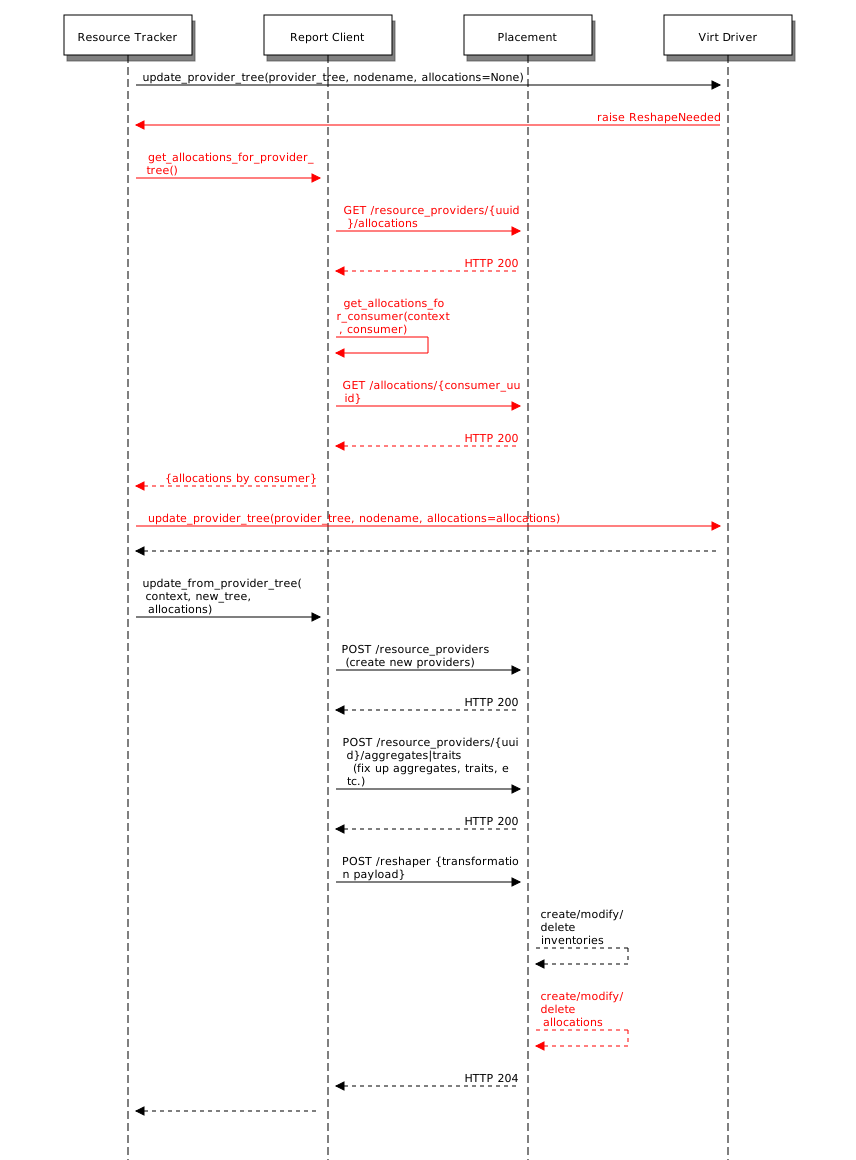
请注意,对于快速前进升级,Resource Tracker 通道实际上是 离线升级脚本。
SchedulerReportClient.get_allocations_for_provider_tree()
将实现一个新的 SchedulerReportClient 方法
def get_allocations_for_provider_tree(self):
    """Retrieve allocation records associated with all providers in the
    provider tree.

    :returns: A dict, keyed by consumer UUID, of allocation records.
    """
消费者不总是实例(它可能是“迁移”——或者将来其他不由 Nova 创建的事物),所以我们不能仅仅使用实例列表作为消费者列表。
我们无法获取与关联共享提供者所有的分配,因为其中一些分配将属于其他主机的消费者。
因此,我们必须发现与本地树中的提供者关联的所有消费者
for each "local" provider:
    GET /resource_providers/{provider.uuid}/allocations
我们不能仅仅使用这些分配,因为我们会错过共享提供者的分配。因此,我们必须获取仅针对上述发现的消费者所做的所有分配
for each consumer in ^:
    GET /allocations/{consumer.uuid}
注意
如果所有消费者的分配都存在于共享提供者上,我们仍然会丢失数据。我没有找到一个好的方法来解决这个问题。但这种场景在短期内不会发生,因此它将作为代码注释中的一个限制记录下来。
返回一个字典,键为 {consumer.uuid},包含结果分配记录。这是 update_provider_tree() 和 update_from_provider_tree() 期望的新 分配参数 的形式,并返回它。
ReshapeNeeded 异常
将引入一个新的异常,ReshapeNeeded。它用作 update_provider_tree() 发出的信号,表明必须执行重塑。这是为了性能原因,这样我们就不需要在不需要时 get_allocations_for_provider_tree()。
对 update_provider_tree() 的更改
分配参数
将向 update_provider_tree() 添加一个新的 allocations 关键字参数
def update_provider_tree(self, provider_tree, nodename, allocations=None):
如果为 None,则 upgrade_provider_tree() 方法不得执行重塑。如果它决定需要重塑,则必须引发新的 ReshapeNeeded 异常。
当不为 None 时,allocations 参数是一个字典,键为消费者 UUID,包含分配记录的形式为
{ $CONSUMER_UUID: {
      # NOTE: The shape of each "allocations" dict below is identical to the
      # return from GET /allocations/{consumer_uuid}...
      "allocations": {
          $RP_UUID: {
              "generation": $RP_GEN,
              "resources": {
                  $RESOURCE_CLASS: $AMOUNT,
                  ...
              },
          },
          ...
      },
      "project_id": $PROJ_ID,
      "user_id": $USER_ID,
      # ...except for this, which is coming in bp/add-consumer-generation
      "consumer_generation": $CONSUMER_GEN,
  },
  ...
}
如果 update_provider_tree() 正在移动分配,则必须就地编辑 allocations 字典。
注意
我不喜欢该方法就地编辑字典而不是返回副本的想法,但它与我们处理 provider_tree 参数的方式一致。
虚拟驱动程序
当前覆盖 update_provider_tree() 的虚拟驱动程序需要更改签名以适应新参数。这项工作将在本蓝图的范围内完成。
当虚拟驱动程序开始在嵌套提供者中建模资源时,它们的实现需要
确定是否需要重塑,并根据需要引发
ReshapeNeeded;通过处理提供者库存和指定的分配来执行重塑。
这项工作不在本蓝图的范围内。
对 update_from_provider_tree() 的更改
将 SchedulerReportClient.update_from_provider_tree() 方法更改为接受一个新的参数 allocations
def update_from_provider_tree(self, context, new_tree, allocations):
    """Flush changes from a specified ProviderTree back to placement.

    ...

    ...
    :param allocations: A dict, keyed by consumer UUID, of allocation records
            of the form returned by GET /allocations/{consumer_uuid}. The
            dict must represent the comprehensive final picture of the
            allocations for each consumer therein. A value of None indicates
            that no reshape is being performed.
    ...
    """
当 allocations 为 None 时,update_from_provider_tree() 的行为与之前(在 Queens 中)相同。
对 Resource Tracker _update() 的更改
将 _update() 方法获得一个新的参数,startup,它从 update_available_resource() 传递下来。
在当前调用 update_provider_tree() 和 update_from_provider_tree() 的地方,代码流程将更改为大约
try:
    self.driver.update_provider_tree(prov_tree, nodename)
except exception.ReshapeNeeded:
    if not startup:
        # Treat this like a regular exception during periodic
        raise
    LOG.info("Performing resource provider inventory and "
             "allocation data migration during compute service "
             "startup or FFU.")
    allocs = reportclient.get_allocations_for_provider_tree()
    self.driver.update_provider_tree(prov_tree, nodename,
                                     allocations=allocs)
...
reportclient.update_from_provider_tree(context, prov_tree, allocs)
对 _update_available_resource_for_node() 的更改
这是目前捕获所有 Resource Tracker _update() 周期性任务异常、记录和忽略的地方。
我们将添加一个新的参数,startup,从 update_available_resource() 传递下来,以及一个新的 except 子句,形式如下
except exception.ResourceProviderUpdateFailed:
    if startup:
        # Kill the compute service.
        raise
    # Else log a useful exception reporting what happened and maybe even how
    # to fix it; and then carry on.
其目的是使 update_from_provider_tree() 中的异常仅在启动时致命。
Placement POST /reshaper
在一个新的 placement 微版本中,将引入一个新的 POST /reshaper 操作。有效负载的形式如下
{
  "inventories": [
    $RP_UUID: {
      # This is the exact payload format for
      # PUT /resource_provider/$RP_UUID/inventories.
      # It should represent the final state of the entire set of resources
      # for this provider. In particular, omitting a $RC dict will cause the
      # inventory for that resource class to be deleted if previously present.
      "inventories": { $RC: { <total, reserved, etc.> } }
      "resource_provider_generation": <gen of this RP>,
    },
    $RP_UUID: { ... },
  ],
  "allocations": [
    # This is the exact payload format for POST /allocations
    $CONSUMER_UUID: {
      "project_id": $PROJ_ID,
      "user_id": $USER_ID,
      # This field is part of the consumer generation series under review,
      # not yet in the published POST /allocations payload.
      "consumer_generation": $CONSUMER_GEN,
      "allocations": {
        $RP_UUID: {
          "resources": { $RC: $AMOUNT, ... }
        },
        $RP_UUID: { ... }
      }
    },
    $CONSUMER_UUID: { ... }
  ]
}
在一个原子事务中,placement 替换 inventories 字典中的每个 $RP_UUID 的库存;并替换 allocations 字典中的每个 $CONSUMER_UUID 的分配。
返回值
204 No Content成功时。409 Conflict任何提供者或消费者生成冲突时;或者如果检测到并发事务。至少对于前者,应使用适当的错误代码,以便调用者可以判断是否需要刷新GET才能重新计算必要的重塑并重试操作。400 Bad Request任何其他故障时。
直接访问 Placement
为了使 离线升级脚本 成为可能,我们需要使 placement 可通过导入 Python 代码而不是作为独立服务来访问。最快的途径是使用 wsgi-intercept 允许 HTTP 交互,使用 requests 库,仅通过网络进行数据库流量。这允许客户端代码使用相同的 API 修改 placement 数据存储,而无需运行 placement 服务。
作为一个上下文管理器 PlacementDirect 的实现已经合并。该上下文管理器接受一个 oslo config,由调用者填充。这允许调用代码控制它希望如何发现配置设置,最重要的是 placement 使用的数据库。
此实现为 Placement POST /reshaper 的离线使用提供了快速解决方案,同时允许在未来进行更漂亮的解决方案。
离线升级脚本
为了方便快速前进升级,我们将提供一个脚本,在所有服务(数据库除外)离线时执行此重塑。它看起来像
nova-manage placement migrate_compute_inventory
…并按以下方式运行,对于主机上的每个 nodename(ironic 除外)
使用 直接访问 Placement 启动 SchedulerReportClient。
通过
SchedulerReportClient.get_provider_tree_and_ensure_root()获取 ProviderTree。实例化适当的虚拟驱动程序。
执行 Resource Tracker _update() 中描述的算法,就好像
startup为True一样。
我们可能参考 https://review.openstack.org/#/c/501025/ 获取需要虚拟驱动程序的升级脚本示例。
备选方案
Reshaper API
在 邮件列表线程、etherpad、IRC、hangout 等中讨论了 Placement POST /reshaper 的替代方案。它们包括
不提供原子 placement 操作——从资源跟踪器一次执行必要的操作。由于竞争条件而被拒绝:调度程序可能会根据不正确的容量信息对正在移动的库存进行调度。
“锁定”正在移动的库存——通过提供锁定 API 或通过设置
reserved = total——同时资源跟踪器执行重塑。由于这是一个 hack;并且从部分故障中恢复会很困难而被拒绝。“合并”形式的新 placement 操作
PATCH(或POST)带有 RFC 6902 样式的"operation", "path"[, "from", "value"]指令。PATCH(或POST)带有 RFC 7396 语义。JSON 有效负载看起来像 Placement POST /reshaper 中描述的稀疏版本,但仅包含更改。
placement 操作的其他有效负载格式(请参阅 etherpad)。我们选择我们所做的,因为它重用了现有的有效负载语法(因此可能能够重用代码),并且它提供了对预期最终状态的完整规范,这是一种 RESTful 的方式。
直接 Placement
对 直接访问 Placement 的 wsgi-intercept 模型的替代方案
直接访问对象方法(进行一些重构/清理)。被拒绝,因为我们会丢失诸如模式验证和微版本逻辑之类的东西。
为这些对象方法创建更简洁、更符合 Python 风格的封装器。短期内被拒绝,为了追求效率。如果对直接放置的需求超出 FFU 脚本的范围,我们可能会在长期内采用这种方法。
使用
wsgi-intercept,但在 REST 层之外创建 Python 风格的封装器。这也是一个长期的选择。
通过 update_provider_tree() 进行重塑
我们考虑每次都将分配传递给 update_provider_tree(),但收集分配会很昂贵,所以我们需要一种仅在必要时才执行此操作的方法。于是出现了 ReshapeNeeded 异常。
我们考虑在每个周期性间隔运行检查和重塑(如果需要)算法,但决定我们除了在启动时之外,永远不需要进行重塑。
数据模型影响
无。
REST API 影响
安全影响
无。
通知影响
无。
其他最终用户影响
请参阅 升级影响。
性能影响
新的 Placement POST /reshaper 操作可能很慢,并且会锁定多个表。其使用应限制为重塑提供者树。最初,我们可能会使用来自 update_from_provider_tree() 的重塑器,即使没有进行重塑;但如果发现这对性能有问题,我们可以将其限制为仅重塑场景,这将非常罕见。
收集分配,尤其是在大型部署中,可能会很耗时且缓慢,因此我们仅在计算启动时执行此操作,并且仅当 update_provider_tree() 指示需要重塑时才执行。
其他部署者影响
请参阅 升级影响。
开发人员影响
请参阅 虚拟驱动程序。
升级影响
支持实时升级。Resource Tracker _update() 流将在计算启动时运行,并根据需要执行重塑。由于我们不支持在实时升级时跳过发布版本,因此可以将 virt 驱动程序特定的更改从一个发布版本中删除到下一个发布版本。
为快速转发升级提供了 离线升级脚本。由于代码在 FFU 的每个步骤中都使用每个发布版本的代码库运行,因此可以将 virt 驱动程序特定的更改从一个发布版本中删除到下一个发布版本。但是,请注意,该脚本始终必须运行,因为只有在特定计算上运行的 virt 驱动程序才能确定该计算是否需要重塑。(如果不需要重塑,则该脚本将不执行任何操作。)
实现
负责人
Placement POST /reshaper:jaypipes (SQL-fu),cdent (API 管道)
直接访问 Placement:cdent
报告客户端、资源跟踪器、virt 驱动程序一致性:efried
离线升级脚本:dansmith
评论和一般捣鼓:mriedem, bauzas, gibi, edleafe, alex_xu
工作项
参见 提议的变更。
依赖项
测试
为所有人增强功能测试,包括针对 Placement POST /reshaper 的 gabbi 测试。
通过他们的 VGPU 工作,在 Xen (naichuans) 和 libvirt (bauzas) 中进行实时测试。
文档影响
Placement POST /reshaper(placement API 参考)
参考资料
历史
发布名称 |
描述 |
|---|---|
Rocky |
引入 |
